

WEBSITES FOR GENERAL CONTRACTORS
Good work deserves
a better showcase.
General contractor website design that helps homeowners understand your services, explore your real work, and take the next step.
Built around your services. Grounded in your actual work.
Selected Goliath website projects
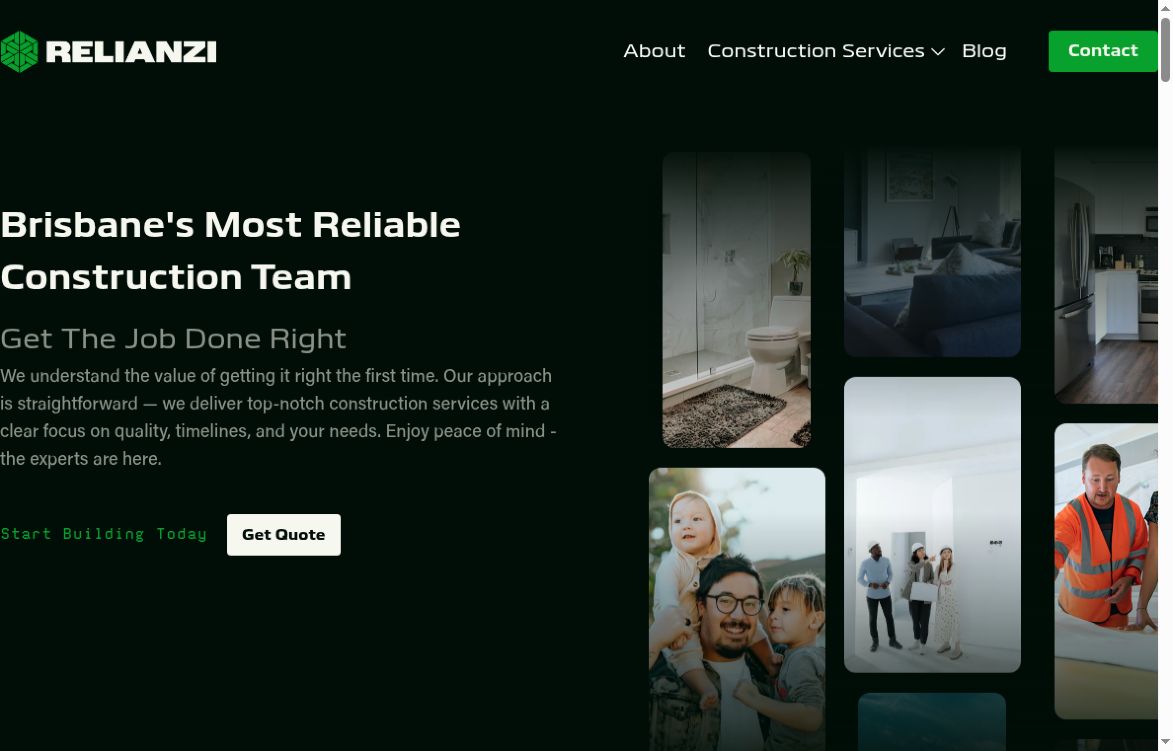
Real websites for construction and home-service businesses, with Relianzi Constructions taking the lead.
START WITH PROJECT FIT
Help the right homeowner
see the right fit.
A homeowner planning an addition needs more than a gallery. They need to know what you do, where you work, and what your role would be.
Start with the projects you actually accept. Explain your services without stretching your capabilities or filling the site with near-identical pages.
See what goes into the scopeMake the essentials easy to find.
- 01The work you take on
Renovations, additions or other services you genuinely provide.
- 02The places you serve
Actual service areas, not a long list of speculative locations.
- 03Why your experience is relevant
Approved project photographs with clear context and an accurate account of your role.
- 04What happens next
A straightforward contact route that matches how your team works.
CONTRACTOR WEBSITE DESIGN IDEAS
Turn a gallery into
something worth exploring.
Choose the structure that best fits what your customers need to understand: your services, your completed work, or how to start a conversation.
Find the right service
Renovations
Additions
What’s included
Scope + service area
See related work
Projects that match
Discuss your project
Lead with the work you do.
Useful when visitors need to distinguish renovations, additions and other services. Give each meaningful scope a clear route.
Content needed: service details, service area, relevant projects.Explore the work
Project story
The starting point
The contractor’s role
The finished work
Make the proof useful
Photos + clear captions
Explore this service
Explain the work behind the image.
Useful when you have approved project records. Show the starting point, your role, an important constraint and the completed work.
Content needed: permissions, accurate records, captioned images.Start a conversation
Your contact details
How should we reply?
About your project
Type · Area · Stage
Not sure yet? That’s OK.
Know what happens next
Make the first conversation easier.
Useful when enquiries arrive without context. Ask about project type, general area and planning stage; allow “not sure yet.”
Content needed: real next steps, routing and privacy requirements.Design around the decision your customer needs to make.
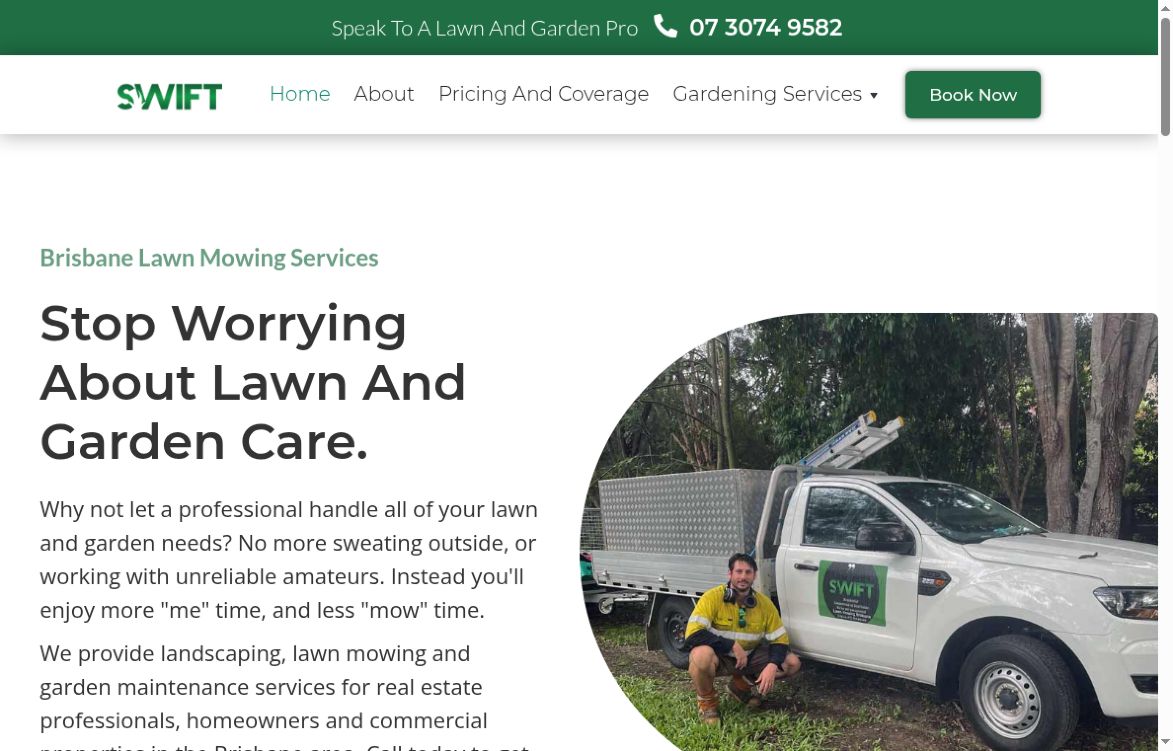
Relianzi puts the construction work at the centre of the page. Bright Green Roof makes an unfamiliar service easier to explore. Swift brings the team, service area and booking route into the first screen. Your website should be just as specific about what customers need to understand.
See the design breakdownsTHE PROJECT PAGE BLUEPRINT
Show your work.
Explain your part.
A few useful project records can say more than a large, unexplained photo gallery. Build each record around facts you can confirm.
- 01
Start with the brief.
What did the homeowner want to change? Keep identifying details private unless their use is approved.
- 02
Be precise about your role.
State the work you handled and credit design or specialist contributions accurately.
- 03
Explain a meaningful constraint.
Describe a documented condition that shaped the work. Use approved images and informative captions.
- 04
Connect the result to a real service.
Describe what was completed. Use costs, timelines and testimonials only when supported and approved.
SCOPE BEFORE SPECULATION
A website that fits
your business.
A scope you understand.
Your current website might need a clearer portfolio, not a complete rebuild. Start with what is difficult for your customers to understand, then agree the work that will address it.
Photography, copywriting, migrations, integrations, hosting and ongoing updates need explicit agreement. They are not automatically included.
WEBSITE PROJECT RANGE
$1,500–$10,000
Depends on the size, complexity and goals of your website. Your proposal defines the final price and deliverables.
Discuss your scope
- Service pages and navigation
- Project-page structure and content ownership
- Enquiry routing and integrations
- Mobile, keyboard and launch checks
- Editing access and ongoing responsibilities
A FEW GOOD QUESTIONS
Before you
start building.
Do I need a page for every service?
Only when it helps a homeowner decide. Use dedicated pages when the scope, questions and relevant work are meaningfully different. Combine closely related services when separate pages would repeat the same information.
What if I have photos, but few project records?
Start with the work you can confirm, your role and approved images. A short accurate description is better than an elaborate unsupported story. Create a simple record for future projects.
Can you improve my existing website?
Possibly. The answer depends on your current platform, content structure and the changes needed. Bring your existing website into the discussion before committing to a rebuild.
How should we measure the website after launch?
Track the services and locations people enquire about, whether the projects fit your business, and how smoothly each enquiry reaches your team. Agree a simple review routine so the website can improve alongside your business.
What should I prepare for a conversation?
Your current website, the services you want to explain more clearly, your real service areas and any approved project material. You do not need a finished brief.
What determines the website price?
The size, complexity and goals of the site. Agree the page count, content responsibilities, project collection, migration, integrations, accessibility checks and ongoing support in a written proposal.
LET’S MAKE YOUR WORK EASIER TO UNDERSTAND
Your next website starts
with a conversation.
Tell us what your current site makes difficult.
We can discuss a scope that fits.



